 Food & Agriculture
Problem Overview: Low nutrient feedstock increases enteric fermentation in animals & lowers yield
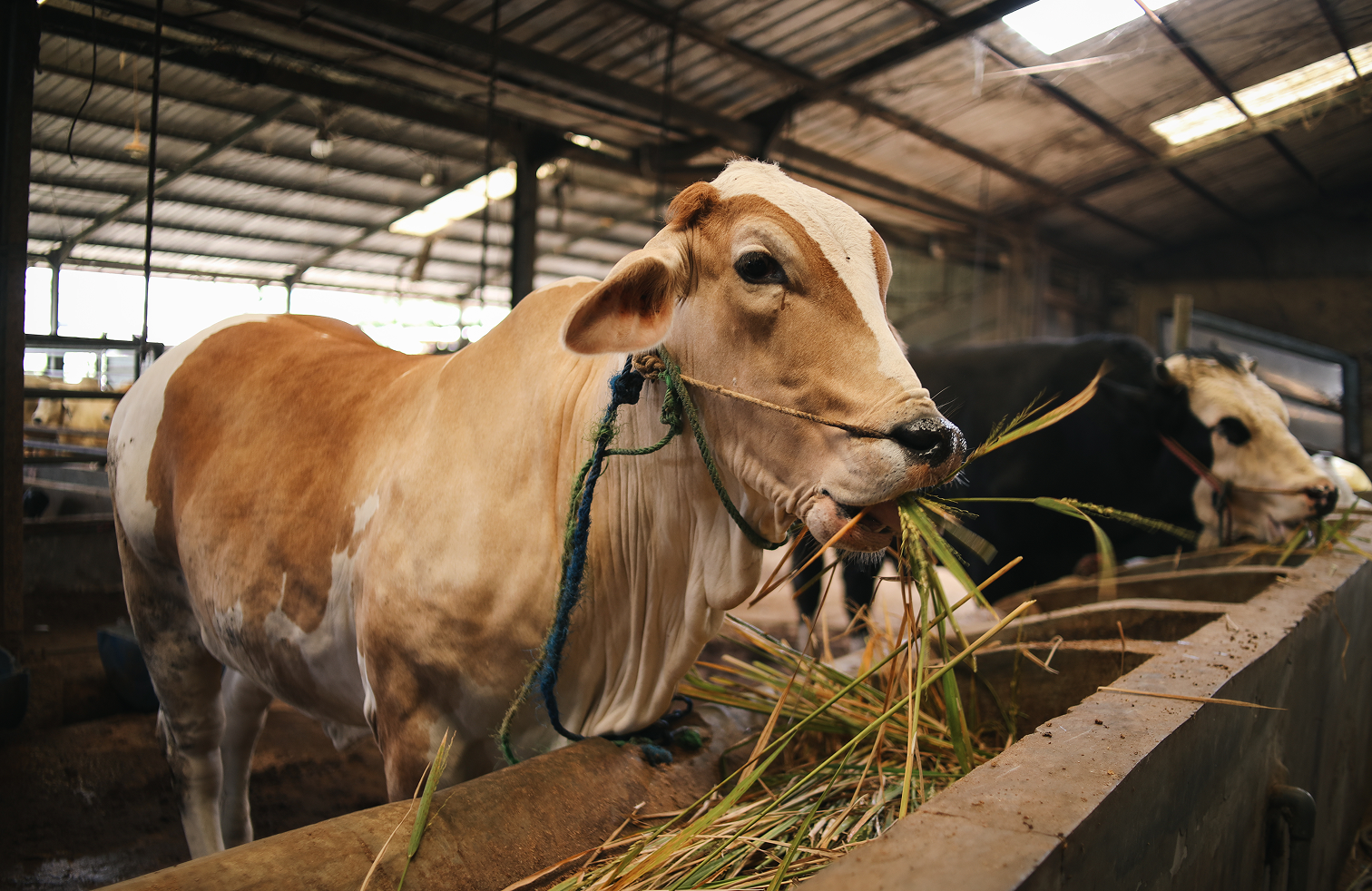
India accounts for ~14% of world’s GHG emissions (methane) from livestock, 90% coming from enteric fermentation. Poor quality, high-fibre feedstock can cause 5-7% dietary energy loss leading to 16-26 g per kg of dry matter intake as waste methane, rather than it being converted to milk. For smallholder farmers who own 2-3 cows, feed & fodder account for 70% of the cost of milk production.
Core Bottlenecks: Innovations not tailored to Indian cattle needs
Solutions for biological nitrogen fixation, balanced fertilizer use & soil monitoring exist but the following challenges are still prevalent:
1. Nutrient Deficit Feedstock
Feed & fodder deficit makes it challenging to meet required nutrition for cattle. CAGR for fodder increased by 9-10% while milk prices increased only by 6%.
2. Additives Diet Mismatch
Most feed additive performs when paired with a high starch + low fibre feedstock, designed for Western farms. Indian cattle mainly feeds on dry straw which is high fibre. No proven commercial additive has worked with such diets
3. Small Herd Sizes
Most existing supply distribution channels established in India are at regional level. Smallholder farmers own only 2-3 cows for self sustenance rather than commercial value.
4. Measurability Issue
No MRV to track feed inputs to milk yield & emissions. Lack of data makes tracking results & reporting for credits impossible.
Existing Approaches and Technology Readiness
Feed Additive (3-NOP Bovaer)
Commercially deployed globally but not approved in India
Synthetic & Microbial Additives
Demonstrated in operational environment, not yet commercially scaled (eg. Harit Dhara, India)
Where is the white-space for innovation?
Efforts are ongoing to solve for Indian cattle breeds and make solutions commercially viable. However, no solutions has proven consistent efficacy or been able to solve to make a substantial difference. There is a need for innovation on three fronts:
 Science Breakthrough
India-Specific Additives that work with Indian high fibre diets
 Engineering Innovation
Data Infrastructure is missing. MRV- aggregation + verification stack is needed to enter the carbon credit market. Initiatives like Maharashtra’s M3 signals a government shift towards livestock methane.
 Business Model
Cost sharing across various entities from farm to processing, fodder-as-a-service, other innovative methods to enable cost distribution & unlock reach to smallholder farmers. Aggregation is possible when working with FPOs & Cooperatives
How we identify climate innovation opportunities?
- Mordor Intelligence (2026,May), India Feed Additives Market Size & Growth
- Grandview Research, (2025). Global Animal Feed Additives Market Outlook 2026-2033
- PK Malik, Raghavendra Bhatta, (2026,Feb). Unmasking the methane myth: Why India’s cows emit far less than global estimates, Downtoearth.org
- ICAR - Harit Dhara & Tamarin Plus
- Arun Raghav (2024, April). Methane Emissions: How Silage can help Environment
- Bovaer (2025), DSM Fermenich
- Assumptions for calculations: Additive Market Considered 35% + 20% Silage

Last Updated On: June 5, 2026
Economic Potential
- India, 2025500Mn USD[1]
- India, 2030700Mn USD[1]
- Global, 2025~8,000Mn USD[2]
Impact Potential
- India, 202575 Mn Mn Mt CO2e[3][4][5]
- Global, 20251250 Mn Mt CO2e[3][6]
 Biodiversity
 Livelihoods
p-ARL Score
6/12
Regulatory Outlook
 Guideline

Spotlight for innovation in India
Research
ICAR-NIANP (Harit Dhara): Phytogenic Additives & Essential Oils

Everse.AI: AI, IoT, Wearable for Cattle Health Monitoring, Feed Additives & Methane MRV

Cornext: Silage baling with 12-18 month shelf life
- Mordor Intelligence (2026,May), India Feed Additives Market Size & Growth
- Grandview Research, (2025). Global Animal Feed Additives Market Outlook 2026-2033
- PK Malik, Raghavendra Bhatta, (2026,Feb). Unmasking the methane myth: Why India’s cows emit far less than global estimates, Downtoearth.org
- ICAR - Harit Dhara & Tamarin Plus
- Arun Raghav (2024, April). Methane Emissions: How Silage can help Environment
- Bovaer (2025), DSM Fermenich
- Assumptions for calculations: Additive Market Considered 35% + 20% Silage
Last Updated On: June 5, 2026