 Adaptation & Resilience
Problem Overview: Unreliable and inaccurate early warning systems
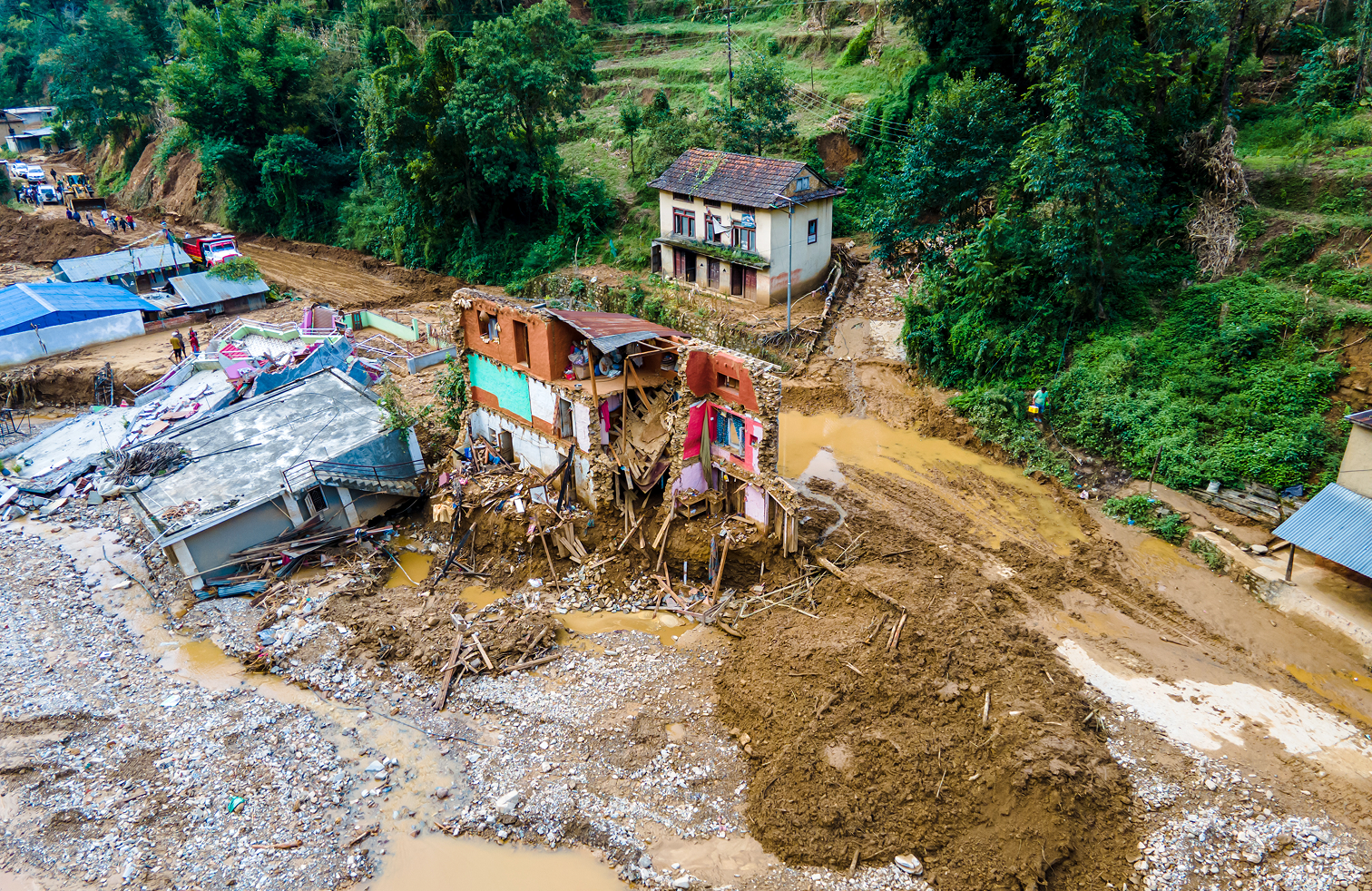
A recent study found that India suffered economic losses exceeding $10.5 bn from just five incidents of extreme weather events[1]. Particularly, Himalayan states are facing increased frequency of extreme weather events from landslides, flash floods and even earthquakes, leading to heavy loss of lives as well as economic losses. There is a lack of reliable environmental sensing networks to provide the data required for building accurate warning systems, climate forecasts, risk analytics, or resilience planning frameworks. There is a need for low-cost, commercialized early warning systems/sensors, especially in high risk areas - such as highways, dams, factories, human settlements, tourist sites. There is a financial case for EWS: According to WMO, every $1 invested in EWS saves $10 in disaster losses [2]. In the Indian context, CDRI's Resilience Cost-Benefit Analysis tool shows a return of 12 times the investment in early resilience interventions[3].
Core Bottlenecks: Last-mile deployment remains a challenge; locals need to be trained to understand EWS
Current solutions and venture funding is concentrated in data/analytics layers and not hardware for last-mile deployment. So while the technology exists, the problem is real and unsolved at scale - making this a business/commercial model question. Key Challenges include:
1. Disseminating alerts in hyper-local, isolated, and low-literacy communities.
2. Protecting equipment from theft and vandalism
3. Integrating satellite data (low-res) with field reconnaissance+local intelligence
4. Gap between EWS to action - how to translate warning into actual decision making regarding responses.
Existing Approaches and Technology Readiness
Data Collection Sensors for Himalayan Region
Deployed in pilot stages
Satellite-based Weather Prediction & Warning
Deployed globally but data not available for lower resolution needed for mountains
Where is the white-space for innovation?
Apart from the need for business model innovation for existing solutions, there’s a critical need for developing solutions which cater to the realities of HImalayan states which addresses challenges including hard terrain, low connectivity, monitoring and validating mitigation measure like slope stabilization etc.
 Engineering Innovation
→ Hybrid risk detection tools integrating IoT solutions with satellite data, onground sensors, and community data.
→ An affordable, tamper-resistant, multi-parameter edge sensor node (soil moisture + displacement + rainfall in one unit) with offline-capable alert transmission, designed specifically for remote Indian mountain conditions.
→Decision Intelligence Systems that convert sensor observations and forecasts into actionable recommendations, automated SOPs, and risk-prioritized alerts
 Business Model / Financial
Current financing comes mostly from government grants and agencies at an ad-hoc basis. There’s a need for building better PPP models of financing which can help scale operations of startups in this space.
How we identify climate innovation opportunities?
- World Bank. (2025). Extreme weather events and their economic impact: A report prepared for the 16th Finance Commission. Finance Commission of India. [Link]
- World Meteorological Organization. (2025). Together to mobilize and share resources. WMO [Link]
- Coalition for Disaster Resilient Infrastructure. (2026). Mainstreaming disaster resilience into infrastructure projects: Insights from infrastructure sectors in India. CDRI. [Link]
Assumptions for calculations 1. Economic Potential calculated on the basis of assumed avoided losses by Himalayan states (10%), and a 2x loss in private infrastructure, derived from national infrastructure losses due to disasters reported by CDRI. 2030 projection based on a conservative 10% CAGR

Last Updated On: June 5, 2026
Economic Potential
- India, 2025~1,000Mn USD [1]in avoided losses
- India, 2030~1,276Mn USD[1]in avoided losses
Impact Potential
- Lives Impacted (Improved Resilience)~15.9 Mn people
- Adaptation Risk Index Score, India18/27
- Hazard
- Exposure
- Sensitivity
- Adaptive Capacity
- Vulnerability
| Low | Med | High |
|---|---|---|
 |
||
| |
||
| |
||
| |
||
| |
 Biodiversity
 Livelihoods
 Connectivity
p-ARL Score
9/12
Regulatory Outlook
 Guideline
Guideline
Guideline
Guideline
Guideline
Guideline
Guideline
Spotlight for innovation in India
Research
IIT Mandi: Ongoing research on developing low-cost EWS which can be deployed in rugged Himalayan terrains

ClimMaTech: Developed AI-based flood monitoring and warning systems with over 95.6% accuracy

Intio Services: Low-cost AI-based EWS that predicts landslides up to three hours in advance with over 90% accuracy.
- World Bank. (2025). Extreme weather events and their economic impact: A report prepared for the 16th Finance Commission. Finance Commission of India. [Link]
- World Meteorological Organization. (2025). Together to mobilize and share resources. WMO [Link]
- Coalition for Disaster Resilient Infrastructure. (2026). Mainstreaming disaster resilience into infrastructure projects: Insights from infrastructure sectors in India. CDRI. [Link]
Assumptions for calculations 1. Economic Potential calculated on the basis of assumed avoided losses by Himalayan states (10%), and a 2x loss in private infrastructure, derived from national infrastructure losses due to disasters reported by CDRI. 2030 projection based on a conservative 10% CAGR
Last Updated On: June 5, 2026